Copenhagen Finale, Redux

Just as it did two years ago, I chose Copenhagen as my capping-off city to my time in Europe — and once again, it proved a worthy choice.

Getting here was an already-planned full-day affair; with airfares in normally-competitive Europe on the Budapest-to-Copenhagen route sky-high on my intended travel day, I sought out cheaper alternatives that would enable me to indulge in one of my favorite travel pastimes on the Continent: riding its legendary network of rail links.

I’d scored a (relatively) budget-y fare on a flight from Vienna to Copenhagen, leaving me with the need to span the gap between the two former Austro-Hungarian capitals by other means. No trouble: Austrian Railways had recently introduced the Railjet, a high-speed-ish, ultra-modern link, that spanned the 150 or so land miles in around 2 ½ hours. I’d booked myself on this knowing that my connection in Vienna would be adequate: roughly two hours from when my train was slated to arrive to when my flight was about to depart.

I arrived at Budapest’s Keleti station with my lingering sniffles nearly vanquished. The Railjet, in the traditional red livery of Austrian Railways with oversized lettering denoting the brand plastered along the side, slumbered in the grand old station, sparkling and new next to the rusting blue exteriors of some local rolling stock. Onboard, the cabin was even better: sharp, comfy gray-leather seats in ones and twos crisp and awaiting their occupants. Yep, Mr. Flashpacker here had booked First Class again, at a cost of about $30 more in exchange for tremendous legroom, AC power ports, and yummy in-seat dining. A noisome tour group of Brits occupied the front half of my train car, while next to me sat a sixtyish American couple with whom I soon struck up a lively conversation: Joyce and Mike were fellow Jewish Californians, hailing from sunny San Diego by way of New York City. We instantly had much to compare about our journeys – as retirees, they’re enjoying a longer getaway, visiting some Central Europe spots before jumping off from Venice on a Balkan cruise. Oh, the pangs of envy!

The train pulled out a few minutes behind schedule and remained that way for the entire journey. This made for a less-than-relaxing journey as I wondered if this would hose me on the other end… last time I had a similar issue with my lengthy overnighter from Copenhagen to Frankfurt to connect with a short flight; golly, what is it with me and rail in normally-punctual-to-a-fault German lands? That Murphy fellow must be cackling.

The train remained a few minutes behind schedule for the rest of its run – though interestingly, the medium for determining this itself indicated the conveyance’s overall fabulousness: TV screens throughout the train cars displayed a digital map and time to arrival, much as in some aircraft.

The first part of the Vienna connection went great: I arrived at the station, then – symphonically almost – as I walked out onto the street, a sparkling, gold-colored Vienna AirportLines bus rolled up. I’d now have over an hour to spare before my fight assuming no further hitches in the estimated half-hour ride out to the airport – which seemed generous considering it was only five or so miles away.

Well, I should’ve known why: it was around 4:30 on a Friday afternoon, and even mid-sized Vienna (population around two million) isn’t immune to rush-hour congestion. We crawled through two skinny lanes of traffic as we struggled to leave Vienna’s old city center behind. Instead of marveling at architectural splendor, the density here was stressing me out. Tick-tock, tick-tock, I thought, as it grew closer to our anticipated arrival time and still no airport in sight. Why do I do this to myself? In my zeal to travel creatively, scenically and unconventionally (today’s journey would involve a metro to a metro to a train to a bus to a plane to an airport train on the other end – assuming I made it), sometimes I don’t anticipate the cascading pitfalls of unanticipated delays.

I needn’t have worried, however: soon I saw the familiar round, hulking brick-brown shapes of Vienna’s old gasometers, a sign we were heading out of the city. We were soon on one of the region’s efficient highways and arrived at the airport practically on schedule. A quick check-in and on board the discount-airline Niki (one of Europe’s many discount carriers), and soon I was riding the rails on the airport train from Copenhagen’s tidy Kastrup airport to the center of town.

Copenhagen’s new budget-boutique hotel, the Wakeup, could not have been more different than the previous spot I’d stayed in Budapest: a clean, simple, ultramodern Scandinavian affair (at twice the price, natch) in a once-industrial area redeveloped so recently its Scandinavian-modern buildings post-date even my last visit. I was soon comfortably ensconced in a compact but incredibly efficient room. Best part: a bathroom straight out of a spaceship in a sci-fi film.

It was Friday night, so after a short nap I opted to head out on the town. I wended my way past the forest of bicycles parked near the train station — I’d forgotten about Scandinavia’s fondness for two-wheelers: all throughout the city’s major streets I had to remember to avoid the so-named “Copenhagen lanes,” slightly elevated dedicated bicycle lanes between the sidewalk and the street; I can only imagine Americans giving up their precious SUV-wide automobile-dependent roads for something as hippie-dippie as a bike.

Even though it was past midnight, the city’s compact core was abuzz, almost as much as London’s party spots were last weekend. It still impresses me how Europe pulls this off: American cities the size of Copenhagen such as Denver, San Diego or Portland – all fairly liberal bastions and respectable party towns in their own right – have nothing on Denmark’s urban hub. I stayed out late, catching up with my friend Anna, a fellow pal of Renaissance Man care of a shared childhood with parents who did the “hippie missionary” circuit. As I walked back to my hotel, the sun was already coming up – oh, it wasn’t that late, but this being high-latitude Northern Europe, in mid-May first light happened before four in the morning.

The next day, I strolled the city’s downtown pedestrian shopping district, Strøget, in search of kiddie gifts for my nephews and nieces (the Lego store was a particular delight – a still-going-strong Danish-made wonder from my youth). Best part: a nicely-rendered Lego model of Nyhavn, the pretty inland canal I’d visited last time I was here.

After a splendid dinner at Anna’s flat in trendy Vesterbro, I headed out for another night on the town; since I’d already been to Copenhagen once before I was able to focus on this town’s more social delights and friends I’d made here. Plus I had an ulterior motive: late nights in Europe meant less jetlag when returning home.

Saturday was at least as ebullient a night as Friday as I headed to the place to see and be seen, Club Christopher. More of an alterna-vibe than many gay nightspots, with a far more motley assortment of gays than one would find back home in one place. I liked that; I’m not one of those fashion police types who demand that people conform to a certain look, and I found the general blending among gays and straights here, along with the mix of outfits, to be refreshing.  I spent the night chatting with a preppy straight boy who comfortably claimed to play around with guys, along with some of his pals from the unpronounceable city of Aarhus who were in town for the weekend. They were staying in a hostel dorm room, and even in fab-hostel Copenhagen their reaction was telling.

“We hate it,” one of them said. They were sharing a room with four others and quickly discovered that the backpacker way isn’t for them. Perhaps in a few years, when their income catches up, I shall introduce them to flashpacking.

Next day was another catch-up day with old friends, in this case my old college chum Cindy, her husband Jonathan, and their two kids (only one of whom was around last time), Thomas and James. Islands Brygge, their district, lay right across the water from the Wakeup and is in a sense a mirror image of where I was staying: also reclaimed industrial land, now lined with those clean, simple, ultra-modern mid-rise steel-and-glass structures for which Scandinavia has become legendary.

A couple of Cindy and Jonathan’s friends and their two kids soon join us for this little party for James’ second birthday. Thomas has grown and blossomed from the slightly shy kid I remember two years back (he insists on my photographing the tall towers of block-like toys he builds, asking solicitously in a mixed Danish-and-British accent straight out of Oliver Twist to my Yankee ears). But James, who wasn’t around yet on my last visit, is something of a bruiser, the sort of kid who bashes into things on purpose just to see what’ll happen. He demolishes his older brother’s constructs with abandon – though on the whole the two adorable little blonde kids play well together. Thomas may still look more like Jacob, my nephew who’s about the same age, but James possesses Jakie’s feisty persona. It still amazes me how the template of one’s personality begins to shine through so early.

I opted to stay out late again on Sunday night, my last in the city, again to ward off future jetlag. It proved worthwhile: even though the city was much sleepier than it was the two weekend nights, I still managed to have some fun at another couple of gay spots, where I struck up a conversation with — of all people! — a couple of dyed-blonde 18-year-olds who claimed to be twins and — wait for it — porn stars. A suitable farewell, I suppose, for my last night in Europe. After taking my leave of the boys and their mates, it was time for a checkout at the hotel, a trip back to the airport, and a long, long flight home with many new memories made back here on the Continent.

Continue Reading

Magyar Majesties: Discovering Budapest

Budapest ranks near the top of “ones that got away” in my tour of Europe’s great cities more than two years ago – which made it a natural as my one “new place to visit” on this minitrip, sandwiched in between those more familiar locales that would bookend the journey.

Alas, it began with one hiccup – or more accurately, a sore throat. Sickness is the bane of every traveler; this goes double for shorter escapes where a nasty bug might span much of a journey. My near-nonstop socializing in London was good fun, but by toward the end of my time there I felt a dispiritingly familiar tingle in my throat – and not simply from vocal (or other) oral exertions. Soon after came the familiar sniffles and such, and for the first time in my overseas travels, I had a bit of a cold.

Aside from that, though, travel was smooth: an early-morning departure from Renaissance Man’s flat, a tube ride to Paddington Station, a train ride to Heathrow, and a quick flight across the Continent. England’s tidy hedgerows and farms gave way to the undulating shoreline of the English Channel and the fields of northern France. The weather, as has been the case my entire time here so far, was glorious.

A smooth flight across the Channel and Continent, then a drop-off care of an airport shuttle at my guesthouse, a gay-owned joint I’d found online located on the third floor of a respectably-maintained Art Nouveau structure. At first I was trepidatious: the building’s ancient, creaky little elevator and no signage indicating my accommodations made me wonder… is this a scam? But I found it, and within moments was greeted by Shandor, middle-aged co-owner of the KM Saga and at least as solicitous and helpful as any official guide. In addition to the usual tourist brochures he also handed me the town’s gay nightlife guide. While Budapest isn’t quite the Central European party spot that is Prague, it apparently always boasted a gay scene – even in Communism’s heyday – and remains the region’s second-biggest such spot after the Czech capital.

The guesthouse itself, meanwhile, was a charmer in its own way: overstuffed period furnishings, themed rooms named after composers (mine was the “Beethoven,” complete with stern bust of Ludwig Van glowering over my bedside), gold-leafed chandeliers, and random knickknacks and doodads that straddled the line between classical elegance and high kitsch. Best part: a king-size bed emerging out of a headboard settee. I loved it immediately.

Thank heavens for such comforts (at a steal of a price, natch – Budapest accommodations are still cheap by Euro standards): deciding to play it safe with my lingering “bubons” (as Jon Stewart terms it anytime he gets sick), I napped and headed out after dark to Raday utca, a nearby pedestrian street, for a bite of dinner. A respectable – and eminently filling – dose of chicken paprikash.

Hungary’s development since the fall of Communism has been alright, though not quite as ebullient as Poland, Latvia, or the Czech Republic. The place still feels like a work in progress, with rundown and smartly-restored Art Nouveau buildings running down long, straight streets. Or so it felt as I wandered through Pest, the mostly flat half of this city on the eastern bank of the Danube.

A glance at the history books tells why: like most of Europe, the town’s had tremendous turmoil through the centuries, though in its case some of it lingers into the present. It’s one of the Continent’s oldest settlements, with evidence of human habitation dating back deep into prehistory. It was a Roman garrison – Aquincum – on the Empire’s northeastern frontier along the Danube. Occupying a similar transitional zone as, say, the Levant, this bridge between East and West was fought over continuously: Christians, Ottoman Turks, Austrian Habsburgs, German Nazis, and Soviet Russians came and went through the ages.

As with Vienna, Austria-Hungary’s western center, the city’s real heyday was in the latter half of the 19th Century, when many of its belle epoque edifices went up and bridges were built across the Danube.

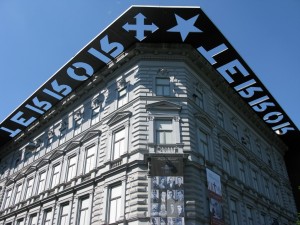
A relaxing meander around City Park then a stroll down leafy Andrássy útca, the city’s answer to the Champs-Élysées, proved a worthy tonic to my sinus congestion and sniffles. I wasn’t really in a museum mood, but one otherwise-handsome building on the wide, tree-lined boulevard caught my eye: the House of Terror. Its pretty façade is lined by a jutting rooftop metal canopy spelling the words TERROR in mirror-backward writing, so the the sun’s rays shine the letters onto the building itself right-side up.

Once the headquarters for Hungary’s Nazi-leaning Arrow Cross, then later used by the repressive Communists as a dungeon and Ministry of Love-ish prison, the place effectively recounts the bad old days of dictatorship and repression. It’s all very well done, with padded cell-style corridors, TVs blaring black-and-white interviews of former political prisoners, and a giant tank standing guard in the central courtyard. The actual dungeons – in the basement of the building – are as squalid and horrific as any concentration camp: dank arching stone walls, hard wooden barracks, rusty commodes, grimy translucent barred windows. I don’t know why I’m so fascinated by such places – in Prague, Riga, and Moscow I also made sure to visit relics of and memorials to former totalitarian regimes – but I leave here equally edified and spooked.

Okay, then. As compensation for brutality, some grandeur and delight. As much as Vienna, Budapest was once home to a thriving café culture. Many closed over the decades or were replaced by establishments of the more modern, Starbucks-ian variety (though, interestingly, I spotted nary a trace of the American coffee chain the entire time I was in the city). But a few remain: Lukács Café’s chandeliers and white-and-gold-leaf trim proved a worthy place to enjoy a tasty (but pricey) cappuccino and delectable chocolate cake (what else?)

Ambling on toward the river, I came upon the hulking, wedding-cake Parliament building, all domed and spired and wedding-cake grand as befits a grand old European capital. Turning the corner onto the riverwalk of the (mostly) blue Danube, I observed something the Magyar capital has over its Austrian cousin: while both lie nominally on the great European waterway, in Vienna the river proper flows a ways out of the city center. But in Budapest, the river runs through it better than old Robert Redford could have imagined: the city is in fact a portemanteau of two formerly separate towns (Buda and Pest), each hugging the broad waterway (and it is broad – one of Europe’s bigger ones, I’d say).

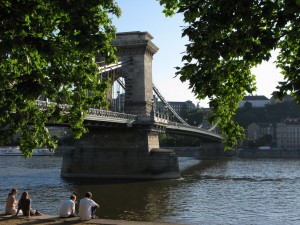
Having meandered the Pest side one day, I opted for Buda the next. The two towns, although separated by nothing more than a river, feel as different as, say, Detroit and Windsor back home (albeit far, far more beautiful than both): Pest’s 19th Century broad, straight streets contrast with Buda’s steep hillsides and curvy byways. To get there I opted for the scenic route, crossing on foot via the Chain Bridge, one of the world’s first suspension bridges dating back to the 1840s. It’s an adorable little structure, a Disney-sized variant of, say, the Brooklyn Bridge, which it predates by half a century. On the bridge, the city’s set-pieces were on show: a couple smooched under one of the bridge’s towers; more dispiritingly, an elderly Gypsy woman begged for change – practically the only such character I saw in my time here (yes, Budapest has fewer homeless than wealthy San Francisco). On the other side, past a florally-festooned traffic circle, lay the funicular to the top of Castle Hill. Here’s where the local flavor vanished and the touristic took over: I heard English spoken widely for the first time, most especially by a surprisingly rotund and rowdy gang from Toronto.

“Pretend this car is full, or it’ll be a sweat box!” said one camera-toter as we clambered into one compartment of the diminutive funicular.

“I can’t believe it’s not air conditioned!”

Oh, dude. Really? It was a warmish day but the splendid ride up the peak lasted maybe two minutes. At the top, predictably grand views across the river, toward Pest. On one side lay the city’s Royal Palace and on the other, the former “commoners” homes of the winding, medieval town – far simpler sloped roofs, and none of the Art Nouveau adornments found across the river. Adjacent the castle, some walled ruins – although Aquincum is a bit north of medieval (and present-day) Buda, these could have been contemporaneous but were more likely later – this place has had many masters, and like Middle Eastern spots such as Jerusalem or Megiddo, one set of invaders sacked, then rebuilt, often on the same spot.

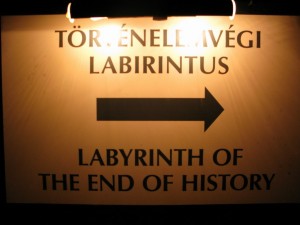
A sci-fi and spookiness-obsessed friend had insisted I visit the underground cave network running beneath the castle. The so-named Labyrinth, which opened onto the street from a run-of-the-mill building on a town street, at first looked like another cheesy tourist trap: hordes of screaming schoolchildren at the entrance didn’t bode so well. But the dank, damp cavern beckoned, and I forked over the moderate-but-not-usurious entry fee to have a look.

Having done precious little travel in my youth, on my grand world tour I found myself more often than not treading the road more traveled. But rather than playing the jaded backpacker, I sought to learn, wherever possible, if the touristic is indeed a waste of time and coin, or if it continues to offer transcendence. Yes, I found disappointment – aggressive touting at the Great Pyramid and the rice terraces of Bali; obnoxious Spring Breaker-style youth on Koh Phangan; overpriced meals and crowds in Venice. But I also found amazing stuff – I thought the Mona Lisa was marvellous; Tokyo’s electronics heavenly (for a techno-geek like me); the Full Moon party a delight.

I’m happy to say Buda’s Labyrinth fit in the latter category. The schoolkids were on their way out, and, as I entered the warren of passageways, found I had the kilometer-long maze almost to myself.

Formed by natural hot springs that bubble up under the city, these tunnels have been occupied by humans since prehistory – a fact driven home by replicas of the Lascaux cave paintings etched into the walls. Haunting medieval-style chants wafted over speakers in the caverns lit only by dim, dim lights. I was transfixed, almost in religious rapture at the dim memory of hunter-gatherers huddling in these grottoes eons ago.

As I passed through the tunnels dedicated to their occupation in historic times, I came upon a pagan-style altar straight out of Tolkien; a “wine fountain” replete with vines and stinking of fermented grapes (signage warns the visitor not to drink the liquid, though I wonder if that’s just to keep tipplers at bay); and a mammoth, partly-submerged head also straight out of Fantasyland’s central casting. Oh sure, Disney and his Imagineers conjure up stuff like this in their sleep… but nothing in the Americas possesses these caverns’ aura of authenticity.

And then, as quickly as the feeling had come, it vanished: the last bit of the attraction, labeled “the End of History,” claimed that ancient fossils had been found – dating back tens of millions of years, it was said – of suspiciously modern-looking shoeprints and computer keypads. High-tech Flintstones co-existing with dinosaurs? Fun for the kiddies, I’m sure, but for me the effect was cloying. So too the last bit, a cavern of “personal discovery” – a pitch-dark mini-maze that could have been fun but for some annoying youths cackling and howling like ghouls and witches.

A quick stop at a touristy (yet reasonably-priced) café nearby, then on to the city’s main attraction: the UNESCO World Heritage-listed Buda Castle.

Although I’d been in the city more than a day, and on this side of the Atlantic for the better part of a week, this felt like the first bona fide “Eurosightseeing” I’d done so far. Unlike its counterparts in Vienna or Prague, however, this one saw combat and destruction as recently as 1944: in addition to the bridges across the Danube, the retreating wehrmacht damaged it significantly. Happily, it’s been fully restored and is now once again a hodgepodge of styles and structures from many different eras: grand 17th Century monumentality contrasting with medieval stone walls – think The Name of the Rose meets Dangerous Liaisons. The city’s History Museum, one of several in this sprawling complex, really rams home this place’s uber-long history even in a continent overflowing with the old: from the skull of a cave bear tens of thousands of years old to scenes of Second World War combat.

Riding a tram along the river, I alighted at the foot of Gellért Hill, the higher of Buda’s peaks immediately facing Pest. Leafy and treescaped, with a soaring victory monument at the top and stairs beckoning for a climb, I resisted the urge as my strength was starting to give out. Hoping for something of the more therapeutic variety, I stopped in at the Gellért Baths – the city’s trove of hot springs has made it a spa town for generations, and the century-plus-old Gellért is reputed to be the granddaddy of them all. Alas, fate was not on my side: although I’d arrived in plenty of time before closing, the spa was booked for a private party. Such is the way of travel, as I’d learned in my seven-month odyssey of occasional missed connections and misadventures (though for the most part my trip moved smoother than a Swiss watch).

As I strolled across the fin de siecle cantilever-style Independence Bridge after a bout of dinner in the Gellért district – unlike touristy Castle Hill, this felt like a more bona fide lived-in district of Buda – I mused some more on this place: unlike spotless Scandinavia or orderly Germany (and its satellites Austria and the Netherlands), Budapest is still in transition. In a way, this echoed my physical state while visiting this town, but more deeply, it echoes the soul of the traveler, the wanderer, in any circumstance. And so too our lives overall, which, if you think about it, are always works in progress. Hopefully, as has been Budapest’s fate in recent years, we manage to build more than we destroy.

Andrássy út

Continue Reading

London Calling Back

I said I’d return someday, and now I’m making good.

I boarded my early-evening flight with a whiff of excitement harkening back to boyhood, when sleepless, eager nights preceded overseas journeys. Even the debut of my round-the-world adventure, two years ago, mired as it was in melodrama and angst, could not equal my feelings as I tromped aboard this stately, lumbering 747400 onto my first eastbound overseas flight from San Francisco, my adopted hometown.

I knew that any follow-on overseas journey to my grand world tour would — at least if I wanted to do it anytime in the near-ish future — involve a shorter jaunt. So I made a pledge: I’d confine big, expansive journeys to utterly new locales – the Mediterranean, sub-Saharan Africa, Brazil. Shorter trips overseas would, by contrast, mirror my domestic trips in one way: I’d use them as an opportunity to visit friends, to revisit favorite locales, and maybe – just maybe – see a smattering of new spots I may have missed on the last go-round.

A silky-smooth arrival into Heathrow boded well for this visit:  a reasonably quick trip through Customs (albeit with an immigration officer as gruff as any in the States), effortless “baggage reclaim,” then off to the Way Out and onto the Heathrow Express. Clean, speedy, and festooned with TV monitors pleasantly delivering a mix of information and events — I learned the origins of Big Ben and the Houses of Parliament in my fifteen-minute ride.

Arriving in Paddington Station, I felt it: I’m back, baby! The cavernous arched canopy of the trainshed covering the sleek conveyances may be a banality to the crowds hurrying to and fro… but for me it was a spectacle worthy of reverance. Ditto the cute statue of a childhood pleasure, the eponymous Paddington Bear.

Fatigue and jetlag notwithstanding, I was determined to give this town’s legendary nightlife a nod. Hopping back on the Tube across town to Notting Hill, I met Renaissance Man — my London pal and host both this visit and last — and a couple of his mates at an outdoor pub table. I’d wandered through this area in my last visit to the city, but strolling the tranquil streets of whitewashed townhomes this time truly made me gasp: London’s sprawling hodgepodge of districts makes for a less perfectly-wrought a city than, say, Paris, but the backstreets of Notting Hill are, in my estimation, as majestic as anything on the rives of the Seine. And at least as pricey: “freehold” townhomes list for three-and-a-half million pounds according to the neatly-framed listings in a realtor’s shop window off the high street.

At our comfy, narrow outdoor bar table, Renaissance Man embraced me warmly as he recounted to his chums the circumstances of our meeting: Calling himself a “male fag-hag,” he told of how he’d gotten up the gumption to talk to an attractive young lady out with her gay pals some years back at (of all places) a gay nightspot in Soho some years back. The lady in question was my sister, who in her sisterly way made sure to link me up with this fellow with the crazy name and an equally crazy background living in London’s trendy Ground Zero.

New York may bill itself as the city that never sleeps, but for my money the once-staid British capital has it (and practically everywhere else in the U.S.) beat by a country mile. On every commercial street of any size, at all hours of the day or night, I saw hordes enjoying the evening (the weather was gloriously warm, as Europe’s been enjoying a magnificent spring); while I’d already remarked on my last visit how Londoners are able to tipple outdoors, I was doubly bowled over, this time around, by the sheer volume of late-night places: it was past midnight when I arrived to a carnival atmosphere on the medieval-wide amble of gay Soho. I didn’t stay out too late as fatigue overtook me, but the crowds and vibe were intoxication enough for one night.

Ten more hours of sleep later, I again met up with Renaissance Man and some friends in Regent’s Park for “a bit of spliff and mellow hanging out,” at a European-themed folk festival. Alighting from the Tube at bustling, over-touristed Piccadilly Circus, I strolled up curvy Regent Street, festooned with shops and endless hordes and classical buildings wrapping around the curve of the street like life-size parentheses. Then, as the park approached, the crowds vanished, to be replaced by quiet, townhome-dense structures bearing colleges and embassies.

We parked ourselves under a broad shade tree a bit of a distance from the small festival, taking place just outside the park’s historic carousel. With jugglers, kids, teenage folk-dancing troupes, and all manner of euro quick-serve fare (fries – ahem, “chips” – with mayonnaise… blech), the place looked like a near-cartoon version of a Saturday in a park, something Renoir might have painted more than a century ago.

“New candidates for the Ministry of Silly Walks,” said another of Renaissance Man’s friends, motioning to two guys on the nearby walking trail doing lunges with Pythonesque absurdity.

After all this we headed out of the park toward the Baker Street tube station. The Sherlock Holmes Museum, at the not-really-but-who’s counting 221B Baker Street, offers up the usual touristy kitsch; we skip it and instead – thanks to one of Renaissance Man’s friends being a photographer – snap some creative poses in front of the London Underground’s Lost & Found office. Some truly remarkable specimens in the window, including mobile phones from the late-1980s that were anything but mobile. Inside the tube station, we continue the fun, as I played dead on a bench like a Holmesian character.

Next day, Sunday, was Lightmans day. This now-sprawling clan of de facto family inhabiting various parts of London’s northwest had graciously scheduled in for a full day of meals and catching up: I began the morning at Joy and Bertie’s, my hosts for part of my last visit. Their adorable daughter Bella, now five-and-a-HALF (as she told me, emphasis on the fraction), played with stickers and such while Joy, Bertie and I catch up on events in both our lives; as an interracial couple they’ve got lots to say about the U.S. presidential situation. Closer to home, Bertie’s had some surgery on both his legs, prompting much discussion of the health care situation on either side of the Atlantic. Happily, he’s doing well.

But first, off to see more of the family: David & Kate and their three kids, ranging in age from 20-year-old Nathan to tween-aged Noa. She at first forgot who I was from last visit, when she posed endlessly for my camera, but a quick chat about America and Justin Bieber (“he’s from Canada, you know!” she says breathlessly) and all is remembered.

After that it was off to eldest sibling Susan and her husband Richard, a soft-spoken fellow also in the technology business. I spent a glorious afternoon in their back garden with some fellow friends of their from Susan’s days at the London School of Economics, and here I felt right at home: smart, savvy academic types doing interesting work in a range of sectors.

As the day wore on, family patriarch Sidney — 87 and still sharp as a tack — comes to get me for a dinner of more Indian food. His wife Ray, in more up-and-down health, remains sharper than I’d expected but as a heavyset diabetic, mobility is necessarily an issue. Still, she’s of reasonably good cheer about it all, and her devoted husband’s caring for her borders on the heroic.

The following day, my last full one in the city, saw me meet another fellow certain to become another pal in my ever-growing roster of friends in the city: Rob’s a techie who lived in San Francisco for nearly ten years before his series of visas ran out and he was forced to return home (he hails from England’s northeast). A former co-worker of a current colleague of mine (also named Rob), this Rob and I compared notes on the IT scene in both cities.

“You’re either in the financial sector, or not in the financial sector,” was how he summed it up. Yep, as I suspected, London’s much like New York or Chicago in that way: there are a scattering of startups and such, but a lot of the work is in the money business, and his friends and colleagues in it report some of the same mixed experiences that I had in that business. And salaries in pricey London aren’t quite as good as in San Fran. He’d only planned to stay here a year before returning to the States, but three years have gone by and he’s still here and for the most part enjoying it.

Heading off the next morning, I mused why I love visiting this town: London, for me as a visitor offers people whose company I adore, coupled with a pulsating, vibrant scene that seems unmatched in the American scheme of things. Although I’m once more settled in San Francisco, the nagging “would I live here?” question always bubbles up in my mind. Not at the moment, I’d say, but if the right opportunity arose, I’d do it in a New York – nay, a London – minute.

Continue Reading

Return to the Road

The book tour is done. Wander the Rainbow is selling steadily (your support is always appreciated!)… and now it’s time for only one thing:

Generate some more travel experiences to write about!

The scale this time is smaller, but the spirit is the same: An eleven-day journey to Europe, to revisit some old destinations and friends, and pay a visit to one place that I didn’t manage to hit last time around.

Specifically, London, Copenhagen, and (the new spot) Budapest.

I’ll be blogging about my experiences, and, if what happens is as fascinating and merit-worthy as my previous travels, it might make it into a revised edition of Wander the Rainbow, perhaps as an epilogue.

See you on the road!

Continue Reading

SoCal Finale

This weekend marked a new milestone in Wander the Rainbow history: the last stop on a book tour that’s spanned eight months and as many cities.

The locale this time was the Los Angeles area, America’s second-largest metro area — though the event in particular was held, perhaps appropriately for a travel book, at a store in Old Town Pasadena, one of the region’s oldest districts, dating back to the 1880s (practically Paleozoic for the American Southwest).

Only a couple of weeks separated this event from my last one in America’s largest city, New York, and the contrast between these two urban behemoths on opposite coasts could not be greater: in New York I braved snow and cold, while in SoCal I strolled with one of my friends (and her adorable pug, Hans) on a beach in Malibu this past Sunday. The sun was resplendent, the sea a sparkling blue, and the weather an L.A.-perfect 70something degrees.

For me, however, L.A. holds different significance than New York; I know the place a lot better, having lived there myself a number of years back. Still, its rep as a not-so-literary movie company town made me almost as nervous about this event as I was about my last one in publishing’s imperial capital. Once again, that nagging fear: would anyone show up?

Answer: yes! Distant Lands, the travel bookstore-cum-outfitter, has a crowd of regulars who file in for their biweekly Monday lectures. The place is done up with classic living room furniture and old maps. Guidebooks and travel works pepper the shelves, while the rest of the store contains items that make the travel-obsessed salivate: packing cubes, backpacks, bug repellent… if you’re going overseas and live in Southern California, this place is a definite must-visit.

To further enhance the event, I demoed some of their wares as part of my presentation: from wheeled backpacks to — arguably the most useful item I took with me on my travels — lightweight, easy-wash, quick-drying underwear. Yes, it is possible to traverse the globe on three pairs of undies if these are the ones in your luggage.

With this pleasant finale event out of the way, Wander the Rainbow is headed in new directions: we’ll continue to book speaking engagements for groups, associations, travel meetups, and the like. Check our events page to see where we’re going next.

However, for you prospective, on-the-fence e-book buyers, we have something even better in store to celebrate eight months in print and the conclusion of our official tour:

All Wander the Rainbow e-books for Amazon Kindle, Apple iBookstore, and Barnes & Noble NOOK are now priced at $2.99!

Now you can travel around the world for the price of a cappuccino back home.

For all of you who attended our events, a hearty thanks; we hope to continue to build our base of fans… and I for one hope to start working on my next book for you to enjoy.

Continue Reading

Egypt

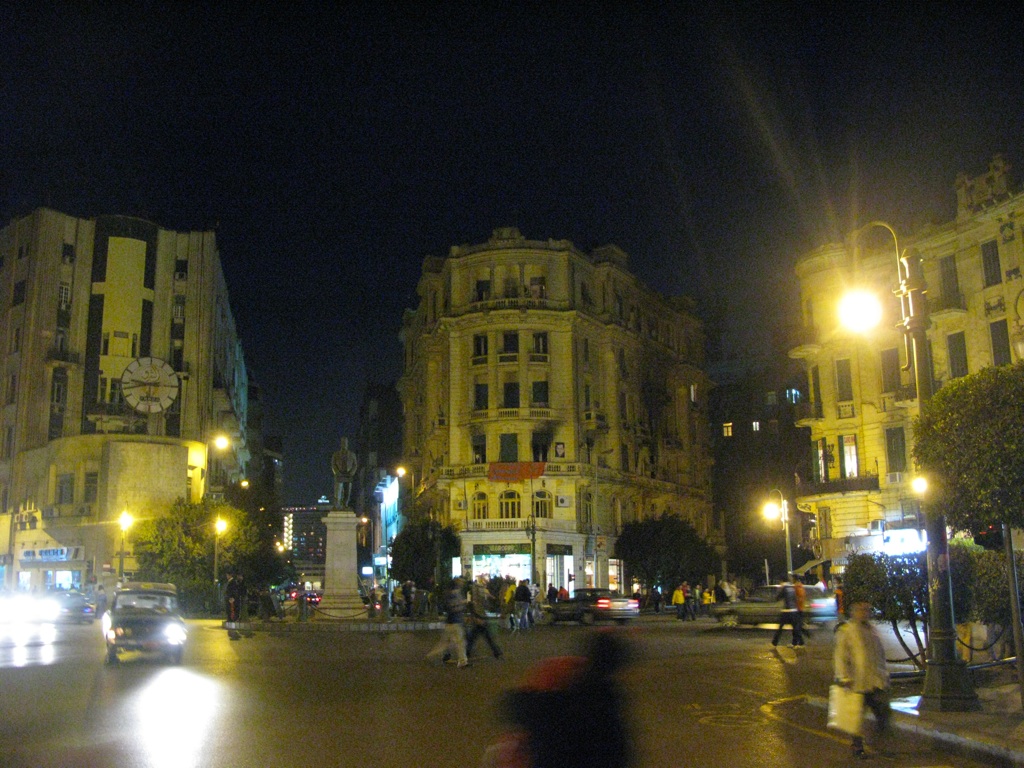
Watching the images on the news these past few days, it’s hard to believe it’s been barely two years since I strolled down Cairo’s gargantuan main city plaza, Midan Tahrir. Back then, it was the middle of Eid-al-Adha, a Muslim holiday akin to our Thanksgiving or Christmas. The streets were alive with revelers, as were brightly-lit party boats cruising the Nile. But still, touring the city and its historic sights for a few days, I couldn’t help but notice the frustration that lay beneath:

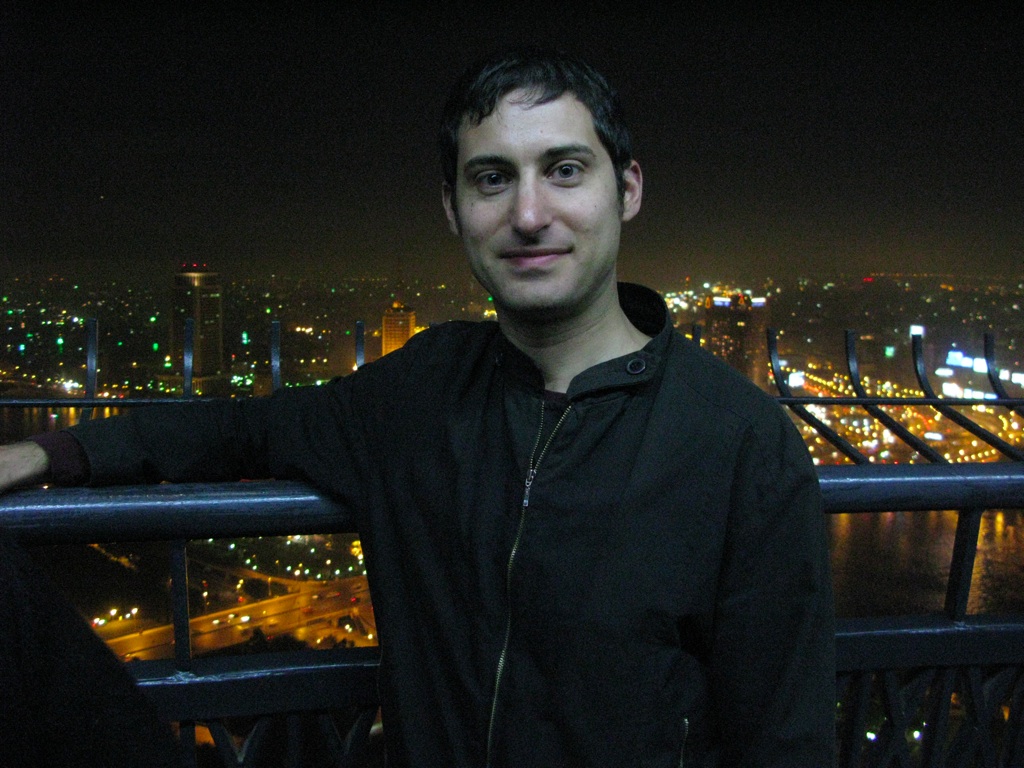
It’s a splendid evening, my last in the city, as I ascend Cairo Tower. It’s a 1960s Nasser-era construct built to showcase the nation’s prowess, something of an Islamic Space Needle. The white concrete weave of the exterior is eye-catching, but somebody didn’t do their
homework on capacity control: a single tiny elevator is the only means of access, which means long lines on both ascent and descent. The views at the top are superb and sweeping: Cairo has precious little in the way of skyscrapers; the few it does have are mostly luxury hotels huddled around the Nile.

I stare out at the monstrous city, a liquid expanse of lights stretching to the horizon, and ponder the paradox: on the one hand, the cafes, street life, and urban chemistry make it one of the most exciting places on Earth — in many respects, it could be London, Paris or New York with a cultural and climatic twist. And yet… it’s hobbled, a great beast weakened by time and circumstance. Economically the country has been stagnant for decades, with many residents complaining that resurgent religious extremism threatens to de-cosmopolitanize the city. I hope not. It feels as if Cairo is just lying in wait for Egypt to rise again, so it may once more take its place as one of the great centers of the world.

My heart goes out to the people of Egypt, and hope that this uprising leads them in the direction of other post-revolutionary lands I visited that have good things to show for it: Latvia and the Czech Republic come to mind.
As a little show of support for it all, I’m attaching the full text of my Egypt chapter from Wander the Rainbow, “Riddle of the Sphinx”. Hopefully all this turmoil will ultimately make it possible for more of you to visit this fascinating land, and see its people enjoy happier times.
Continue Reading

Empire State of Mind

New York scares the bejeezus out of me.

Well, okay, not quite… but America’s biggest city has long filled me with a mixture of awe and terror. Its massiveness, its bustle, its traffic… on the one hand, for an urbanite like me Manhattan is perhaps the ultimate expression of a city (though now that I’m world-travel-enhanced, Tokyo, Paris, Bangkok and Buenos Aires have been added to the roster.)

Urbanity aside, though, the town’s perceived attitude, its history of crime — on a trip here in high school, a friend and I were scammed out of $40 on arrival at the pre-Guiliani-era Port Authority bus terminal — its status as the center of so many industries — finance, publishing, the arts — has effectively guaranteed intimidation on my part.

So you can imagine my trepidation at holding a book event here.

Touching down at a greatly-remodeled JFK airport after a red-eye flight, I grabbed my bags and proceeded to a blessedly orderly taxi line. No scams this time around, though a few unofficial cab drivers still saw fit to call out “taxi! taxi!” to the waiting crowd. Some things never change. After dodging morning traffic on the Van Wyck and Long Island Expressways, we headed across Manhattan to a friend’s apartment in the now-trendified Hell’s Kitchen, the neighborhood made famous by the musical West Side Story. Like so much of Manhattan’s once-gritty neighborhoods, formerly-rundown brownstone tenements now boast upscale condos, and check-cashing places have been replaced by cafes and sushi restaurants.

But none of that for me: after a nap and a catch-up with a friend who lives in the area, I hopped on the subway downtown to McNally Jackson Books, unsure what awaited me in a city with lots of options for the literary-minded. That nagging fear every author feels reasserted itself: what if nobody shows up?

The bookstore, located in the SoHo/NoLita area, is arguably one of the more fab spots to hold an event: a gorgeously done-up cafe with a ceiling festooned with old books hanging, lamp-like, accompanying wallpaper that’s made up of old book pages. The place was bustling — always a good sign for an indie bookstore in these times.

Best part: in the center of the store sat the Espresso Book Machine, planned as a showpiece for the event. This new device just might be a lynchpin in the revolution now sweeping the publishing business: Printing books on demand is becoming more established — Wander the Rainbow is printed that way, and many backlist titles from traditional publishers are as well. But this device takes it a step further: about the size of a washer/dryer, it’s designed for retail outlets; it can print a perfect-bound paperback book in about five minutes. When I learned that McNally Jackson was going to be one of the first customers for this gizmo — and the first retail bookstore in New York City — I made the necessary arrangements to work a demo of this device into the event. In the publishing world’s mothership, this made perfect sense.

Chatting with the amiable bookstore staff and the folks from EBM manufacturer On Demand Books put me at ease; so too did the clusters of people filtering in as event time drew near. Yes! All my efforts at breaking through New Yorkers’ legendary intransigence seems to have paid off. As I continued my speech and excerpt-reading, some random bookstore patrons even sat themselves down and listened intently. I not only read my usual three excerpts, but by popular request read a fourth and responded to some questions by a noticeably enthused audience.

After the event, I had the unique experience of signing copies still warm from the EBM printer — literally hot off the press! Needless to say, I was plied with questions about indie-publishing and print-on-demand processes from some New York writers. And from some published authors as well: Lost Girls Jen and Amanda, inspiration for my journeys some three years back, were in attendence.

With this warm NYC welcome, it was time for me to get more fully reacquainted with this town, having been absent from it for almost seven years.

After a celebratory post-event dinner where we were served by a totally-cute, uber-friendly waiter at trendy gay eatery Elmo, I rose bright and not-too-early for a Midtown meander. A few New York set pieces were on show, from the bustle of Bloomingdales to the deco grandeur of the Chrysler Building (I actually went into the lobby for the first time) to the bustle of Grand Central Station.

Now scrubbed and polished and restored to its prewar grandeur, Grand Central can proudly stand shoulder-to-shoulder with its European or Japanese rail-station counterparts. En route I had to suppress a chuckle when, cruising down the street, I passed a fellow in mid-convo on his cellphone: he delivered the line, without a shred of irony, “are you fuckin’ kidding me!?”

New York set-piece indeed.

Turning west, I paid my respects to that ultimate temple of literacy, the main branch of the New York Public Library, its stone lions clad in a thin coating of snow from the night before. I’d never been inside this building before either and was suitably agape at the cavernous main reading room.

And yes, really playing the tourist, I buzzed through Times Square. The place has been so thoroughly prettified and glitz-ified that its seedy past — which I remember from a long-ago first trip to New York as a kid in the 1980s — is hard to imagine. Though I can see why some New Yorkers remain intransigent: writer Jimmy Breslin, interviewed some ten years back on the removal of sex shops and hookers and its replacement by Toys R Us and Disney stores, remarked, “Disney? I’ll take the hookers!”

Still, the place offers amazement: in addition to its bright-light insanity (rivaled only in my travels by Tokyo districts Shibuya and Shinjuku), a glance southward where Broadway and Seventh Avenues diverge reveals an incredible, dense panoply of high-rises old and new. It may have its detractors, but the district’s pulsating adrenaline rush in many respects embodies the city as a whole.

After a tasty dinner of legendary New York thin-crust pizza, time to re-explore the city’s nightlife. Things have changed a lot since I was here last, at the end of an era of mega-clubs and insanely late nights made possible by an assortment of controlled substances. Twilo, Tunnel and Roxy may be gone, but they do have successors: I managed to get a nice groove on at Rockit Fridays and managed to chat up (and then some) a couple of locals. Bollocks to the cliches: New Yorkers are no less friendly than any other city, and more so than many others I’ve explored.

Having given Midtown its due the day before, I headed downtown the next day to marvel at the cast-iron facades of SoHo, then walked all the way down to the bottom of the island, where streets are as narrow and (sometimes) as cobblestoned as any in the Old World. New York oozes ambition, urbanity, and modernity, so it’s sometimes hard to remember the city is almost four hundred years old.

Nevertheless, the heart of Lower Manhattan boasts the ultimate shrine to the future, and Mecca for me: J&R Music World, one of New York’s several discount electronics superstores that have been around since the likes of Best Buy and Amazon were nary a glimmer. Their pricing is still boss and I found myself lusting after a new TV I absolutely gotta have for my bedroom. Maybe soon.

Another herald of present and past lurked nearby: the mammoth construction site for the new World Trade Center, formerly Ground Zero and the old World Trade Center. Last time I was here it was still a smoking hole in the ground, the wounds fresh and raw. The pace of redevelopment has been slow, but at least it’s moving along: the memorial is set to open later this year on the tenth anniversary of the iconic date, and the signature building (thankfully no longer called the “Freedom Tower”) is rising up amid its skyscraping neighbors. One of my sisters was living in the city when the towers fell, and the memory of that day still resonates.

For my last evening in the city, I reconnected with more friends new and old, and went with some of them to a rather slickly-produced drag show… perhaps appropriate for a town that takes its theater seriously. Sharing a cab home with an old Chicago pal who moved here six years ago, I heard perhaps the best summary of his adopted hometown: “You find attitude in some places, but then go next door and you never know… you may be making out with a Brazilian model.”

Riding out to La Guardia airport across the Queensboro Bridge the next day, my cab passed Silvercup Studios, where the series Sex & the City was filmed — an inspirational and aspirational bit of television for so many of us (well, at least me, who’s memorized practically every episode). After an absence of so many years, the city really shone for me this time around, and I’m pleased to find my Empire State of mind restored.

Continue Reading

Sea to Shining Sea

With the New Year underway — and some of us still digging out from various snow and other weather events — it’s time to get the Wander the Rainbow roadshow back on the road.

The beginning of 2011 sees us heading to America’s biggest cities — New York City and Los Angeles. While in the conventional publishing world these are typically the first spots on a book tour (to say nothing of movie premieres), in the case of a grassroots, indie-publishing effort, the calculus is reversed: we waited for Wander the Rainbow to garner momentum, and now — thanks to social networking, “backdoor” publicity, “guerrilla” marketing… plus some marketing of the more conventional kind — we’re finally ready to hit the big-time.

Well, mostly ready. I’d be remiss if I didn’t confess to some pre-event jitters. As always, we’ll be offering up some unique event goodies — prize giveaways for those of you who best answer our travel questionnaire, and (of course!) complimentary chocolates.

But for New York and L.A. we’re going one further.

In New York, our event — happening this Thursday, January 20 — is at venerated indie bookseller McNally Jackson Books. Located in the heart of historic SoHo/NoLita, this bookstore is looking to the future: they’re one of the first customers for the Espresso Book Machine, a device that prints books on demand right in the store. We’re planning to demo this groundbreaking piece of technology and maybe print off a few copies of Wander the Rainbow on demand before your very eyes. Appropriate for a city that’s often synonymous with book publishing.

For our return to the West Coast, and our debut in tinseltown, we plan an equally showmanlike event. We’ll be at Distant Lands on Monday, February 7, a bookstore-cum-travel-outfitter in the heart of Old Pasadena. Using some of the store’s travel-outfitter wares, we’ll talk about how to pack light, efficient, and fabulous for a long journey. Living out of a backpack for seven months sounds like a hardship for many — but we’ll show that it need not be.

Look forward to seeing you all on either coast!

Continue Reading

Book Trailer

Just in time for the holidays, Wander the Rainbow has a book trailer up on YouTube:

For those of you unfamiliar with this little bit of marketing magic… since movies have had trailers (or “previews”) around since time immemorial, why not books as well? With the advent of point-and-click video editing software and sites such as YouTube for sharing video, the arrival of video-based promotion for books was inevitable.

Thanks to Steven Booth at GOS Multimedia for his deft compilation and editing — I think you’ll all agree this looks grand.

Continue Reading

Mileage Runners

I have a friend whose travels are a mystery to me.

I don’t mean he’s superspy Jason Bourne or anything like that; but rather, it’s the style of his travel I don’t get: he takes literally dozens of trips a year, including at least six to faraway international destinations. None of the trips are very long: he’s got one planned to London next month for a total of four days (this is out of San Francisco, a ten-hour-plus flight to the U.K.). When he discusses his travels, it’s mostly to highlight the business-class upgrades he’s gotten or the uber-cheap fares he’s paid.

At first this raised my hackles, as I thought, oh great, another one. But he’s not the sort who seeks to impress or to give the illusion of pomposity and wealth; au contraire, this guy’s a down-to-earth fellow with a modest studio apartment in Oakland and a job in the public sector. So what gives?

One clue came when he said, “I care more about getting the best fare and the most miles rather than the destination.” He then pointed me in the direction of FlyerTalk.com, a site I’d stumbled across some years back during my days of grueling, weekly, back-and-forth inter-city commuting that makes up the backdrop to Wander the Rainbow. As you loyal readers will note, this wasn’t exactly the high point of my life, getting on a plane every week… so why, I wondered, would someone do this voluntarily — even if it meant weekly jaunts to holiday destinations?

When I looked on FlyerTalk, I discovered my answer: I’m friends with Frequent Flyer Guy.

This persona is no doubt familiar to those who’ve seen Up in the Air, last year’s Oscar-nominated George Clooney vehicle. Clooney plays a professional “corporate downsizer” who flies around the country for work, rarely setting foot in his home base and relishing the allure of the road. When family members fret that it’s an isolating life, he replies — while walking through a crowded airport concourse, natch — “Isolated? I’m surrounded!”

While Clooney’s character does it for work, there’s a growing subset of travelers for whom fares and miles are their lifeblood: they haunt FlyerTalk and other forums, seeking those oddball last-minute super-saver deals and airline hiccups that will cost them next to nothing and earn them maximum miles (routings such as San Francisco-Honolulu-Los Angeles-Denver are not uncommon). To them, the destination is almost incidental, a mere stop on the merry-go-round of airport lounges, premium frequent-flyer status, and first-class sleeper seats. Many of them can be seen, now at year’s-end when many of us are focused on holiday prep, doing “mileage runs” — brief trips that are deliberately long in distance and low in price, for the express purpose of topping off one’s frequent flyer account (premium status on most frequent flyer programs requires flying a minimum number of miles a year).

If there’s one thing my rather unique style of travel (solo gay “flashpacking” around the world) taught me, it’s to avoid judging the way other people embark on journeys. And yet… there’s something about frequent-flyer junkies that leaves me a bit disconcerted. While I applaud any effort made by harried, overworked Americans to get out there and explore other lands, I can’t help but wonder if something’s being lost here. While I do love my perks (I scored some business class upgrades on my world journey thanks to my own now-depleted stash of frequent flyer miles), for me the transformative nature of long-haul travel is what drew me in — and the experiences and insights I garnered overseas held meaning and significance enough for me to codify them into a memoir. While not every journey can be — or need be — so memorable or monumental, I wonder if these miles junkies wouldn’t be better served by journeys longer and more psychically impactful.

But don’t let me be the final word: I’d be interested to hear what you (miles hounds included) have to say. If you’re reading this in an e-mail, please feel free to go to the blog site; if you’re already there, click on the “Comments” just below this entry to have your say.

Continue Reading